.png)

Quotation Tool
Transform Vodafone's Excel-based quotation tool into a digital product that simplifies the experience for both Creators and Approvers, while aligning with the structure and scalability needs of the broader product hub.
Problem

Global SIP lived in a data heavy Excel workbook shared by email. A steep learning curve for Creators, zero visibility for Approvers, and every handoff devolving into an email back-and-forth.
Result

A digital pricing tool with an IA built around how Creators think, a Hub giving Approvers real visibility into status and versions, and in-product commenting that keeps both roles in sync, designed to extend across the hub's other processes.
40%
increase in customer task completion

My Role
Product Designer
Led product design from concept to delivery, facilitating cross-functional collaboration and translating goals into actionable execution plans.

Tools
Figma
Sketch
Jira

Team
2 Product Designers
11 Developers
PM

Duration
7 months
3x
faster quote approval
TL;DR
Out of the spreadsheet, into the system
Global SIP transformed Vodafone's data heavy Excel quotation tool into a digital pricing product for quote Creators and internal Approvers. I restructured the IA around how Creators build quotes and designed a centralized Hub with real-time tracking, version history, and in-product commenting, replacing fragmented spreadsheets and email. Built within Vodafone's design system, these patterns were designed to scale across the broader hub, improving task completion by 40.12%.
Understanding the Existing Workflow
What looked like a simple pricing workflow was actually a fragmented process spread across spreadsheets, email, and manual approvals. Every handoff introduced delays, duplicate files, and uncertainty around status and ownership.
The Process before the Product
.png)
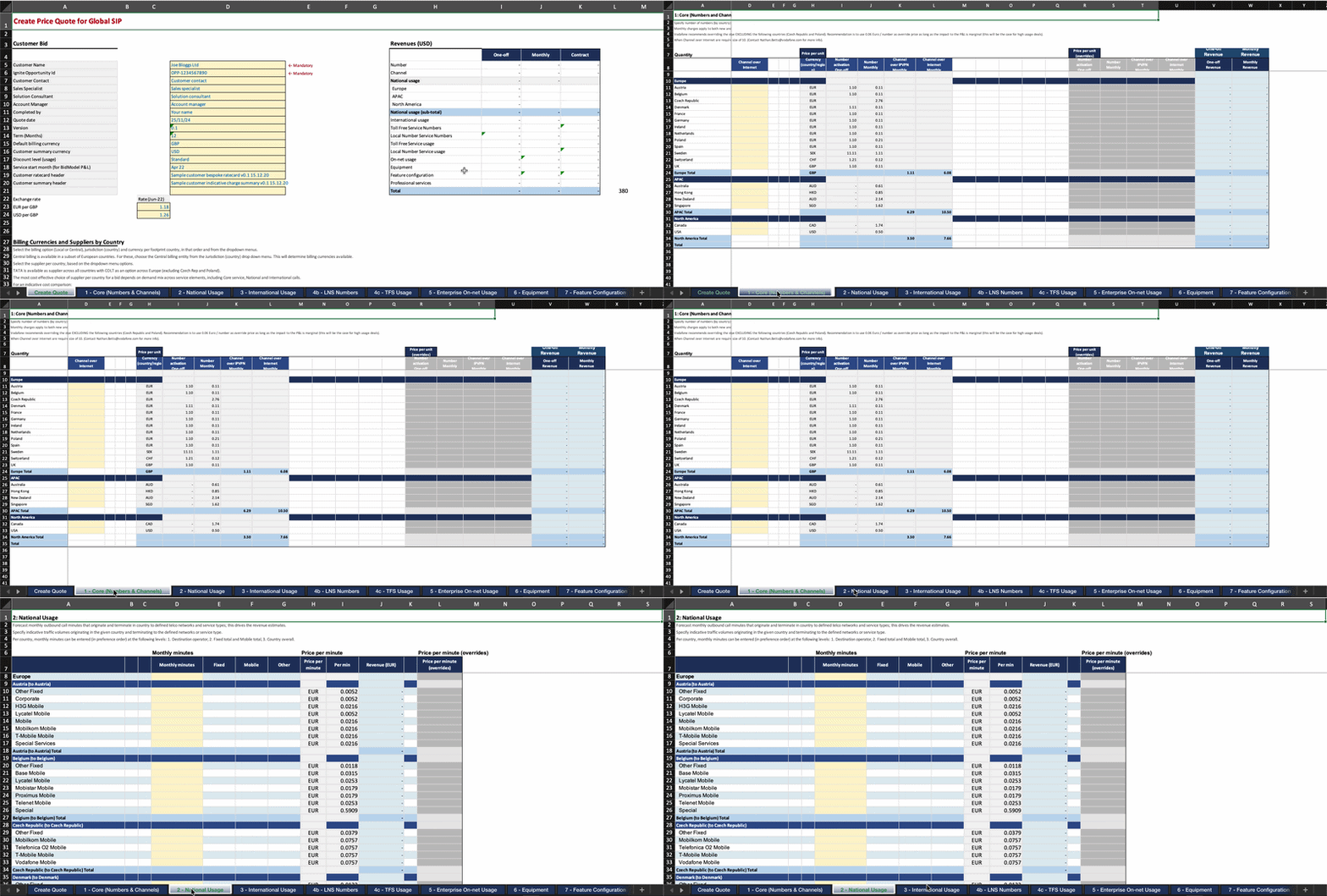
The Master Spreadsheet
Design Decisions
1. Restructuring a Spreadsheet into a Product
The Excel tool's complexity wasn't just visual, it was informational. Intricate formulas and interdependent tabs made the spreadsheet's structure the workflow, creating a steep learning curve and limiting how the tool could scale.
Design response: I mapped the existing tabs by function rather than spreadsheet structure, then consolidated related information into contextual sections that appear only when relevant. The new IA mirrors how Creators think through building a quote instead of exposing the underlying calculations.
Before - structured by formula
1. Core (Numbers & Channels
2. National Usage
3. International Usage
4a. LNS Numbers
4b. TFS Usage
5. Enterprise On-net Usage
6. Equipment
7. Feature Configuration
8. Professional Services
9. SFR (Service Change Req)
After - structured by intent
2. Creating a Shared Workflow for Creators and Approvers
Creators submitted quotes with no visibility into the review process, while Approvers worked from static files with no version history or reliable way to track changes. Feedback was scattered across email threads, making every review cycle slower than necessary.
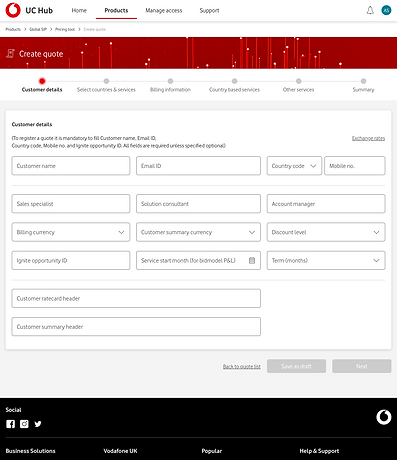
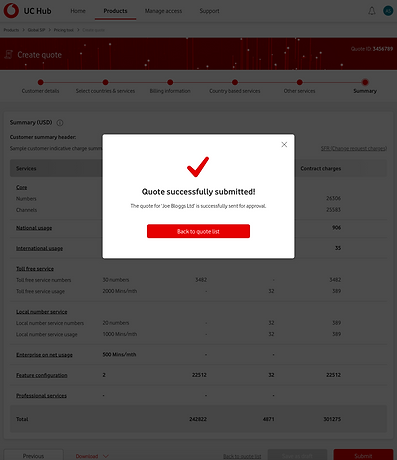
Design response: I designed a centralized Hub where Approvers could track quote status, review version history, and leave contextual comments. Updates automatically changed the quote's status, giving both roles a single source of truth throughout the approval process.
Approval of quote
Quote list with status upfront

3. Designing for a Platform, Not a Single Feature
Global SIP needed to fit within Vodafone's broader Hub, meaning the solution had to work with the existing design system while remaining flexible enough for future products built on similar workflows.
Design response: I reused established Hub components where possible and introduced reusable patterns, including status indicators, version history, and dashboard layouts as documented additions to the design system, enabling other spreadsheet-based workflows to adopt the same interaction model.
UC Hub Products

Learnings
Deep Product Familiarization
Understanding complex products, like a data-heavy Excel tool, is essential to identify limitations and inform impactful design improvements. This experience reinforced the importance of immersing oneself in a product’s details to craft effective, user-centered solutions.
Designing for Growth
Creating scalable designs with future expansion in mind is key for long-term product relevance, allowing the solution to grow alongside the business and adapt to changing needs.
Building Stakeholder Trust
Establishing open communication, demonstrating transparency, and consistently delivering on promises create a solid foundation for lasting relationships and facilitate smoother decision-making processes.